nint
nintSarah Chen
Co-founder & CTO·July 5, 2026
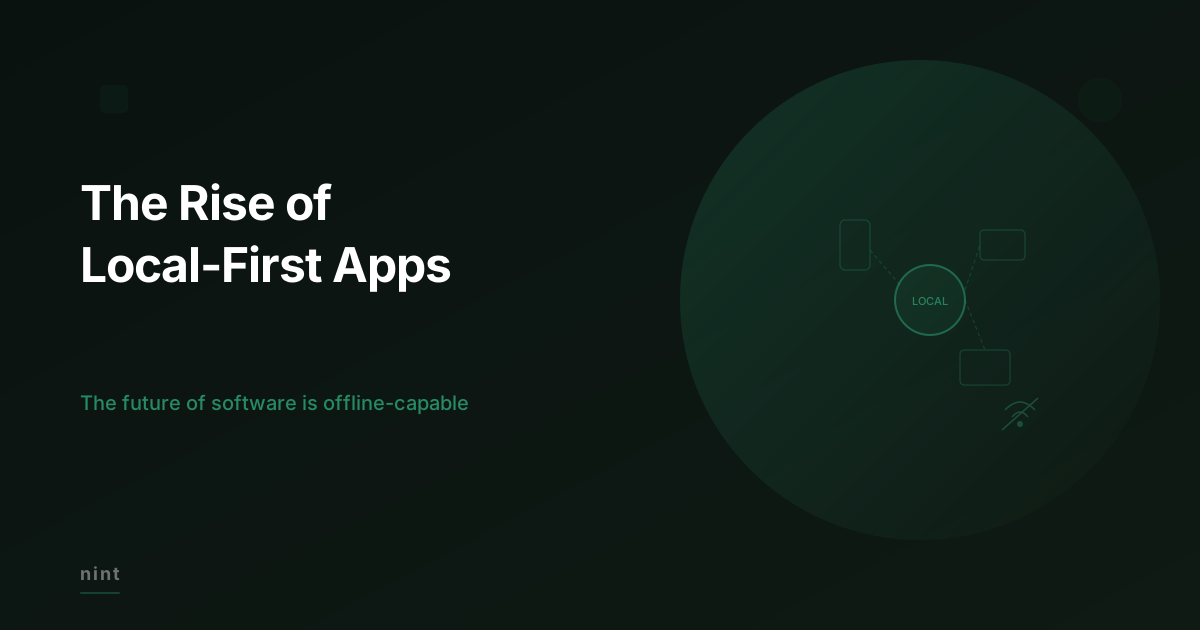
"Local-first" used to mean "limited." No sync, no collaboration, no cloud features. In 2026, that's no longer true. Local-first apps now offer everything cloud apps do, but with a fundamental difference: your data belongs to you.
A local-first application:
This is in contrast to "cloud-first" apps where your data lives on company servers and you access it through their interface. If the server goes down, you lose access.
Between 2020 and 2026, users experienced:
Each incident pushed privacy-conscious users toward alternatives they can trust.
Three technical advances made local-first practical:
CRDTs (Conflict-Free Replicated Data Types): Enable multi-device sync without a central server deciding what's "correct." Changes merge automatically.
End-to-End Encrypted Sync: Data syncs between your devices through relay servers that can't read the encrypted content.
On-Device AI: Machine learning models small enough to run on phones eliminate the need to send data to cloud AI services.
When you use a cloud-first app, you don't own your data in any meaningful sense:
Local-first inverts this. The company provides software; you keep the data.
Not every app benefits equally from local-first architecture. It matters most for:
Modern local-first apps are built on:
| Layer | Technology | Purpose |
|---|---|---|
| Storage | SQLite / IndexedDB | Fast local database |
| Sync | CRDTs / operational transforms | Conflict-free multi-device sync |
| Encryption | E2EE (Signal Protocol, MLS) | Private sync through relay servers |
| AI | On-device models (Core ML, ONNX) | Intelligent features without data exposure |
| Backup | Encrypted device backups | Protection against device loss |
Wrong. Modern local-first apps sync beautifully between devices using CRDTs and E2EE. The difference is that the sync server can't read your data.
Wrong. Your phone, tablet, and computer all have access. They sync through encrypted channels.
Not if you use encrypted backups. Device backup solutions (like iCloud encrypted backup) protect against hardware loss.
Local-first benefits everyone: it's faster (no network latency), more reliable (works offline), and more durable (survives company shutdowns).
Local-first represents a philosophical shift in software. Rather than "rent access to your data stored on our servers," it's "we provide tools, you keep your data."
This isn't anti-cloud. Cloud infrastructure powers the sync layer, handles software updates, and enables collaboration. But the relationship changes: the cloud serves you, not the other way around.
nint is built on local-first principles from day one. Your financial data lives on your device, the AI runs on your device, and sync (when enabled) is end-to-end encrypted. If nint disappeared tomorrow, you'd still have all your financial data on your phone, fully accessible.
That's what real data ownership looks like.
Join the local-first movement. nint gives you powerful budgeting with AI that runs on your device, syncs securely between devices, and works offline. Your financial data stays yours, forever. No cloud dependency, no data hostage situations.
Join 20,000+ users who have secured their financial future with nint's private vault technology.
Related Posts